UFC AI Betting Models: Machine Learning Odds Predictions
 Available in US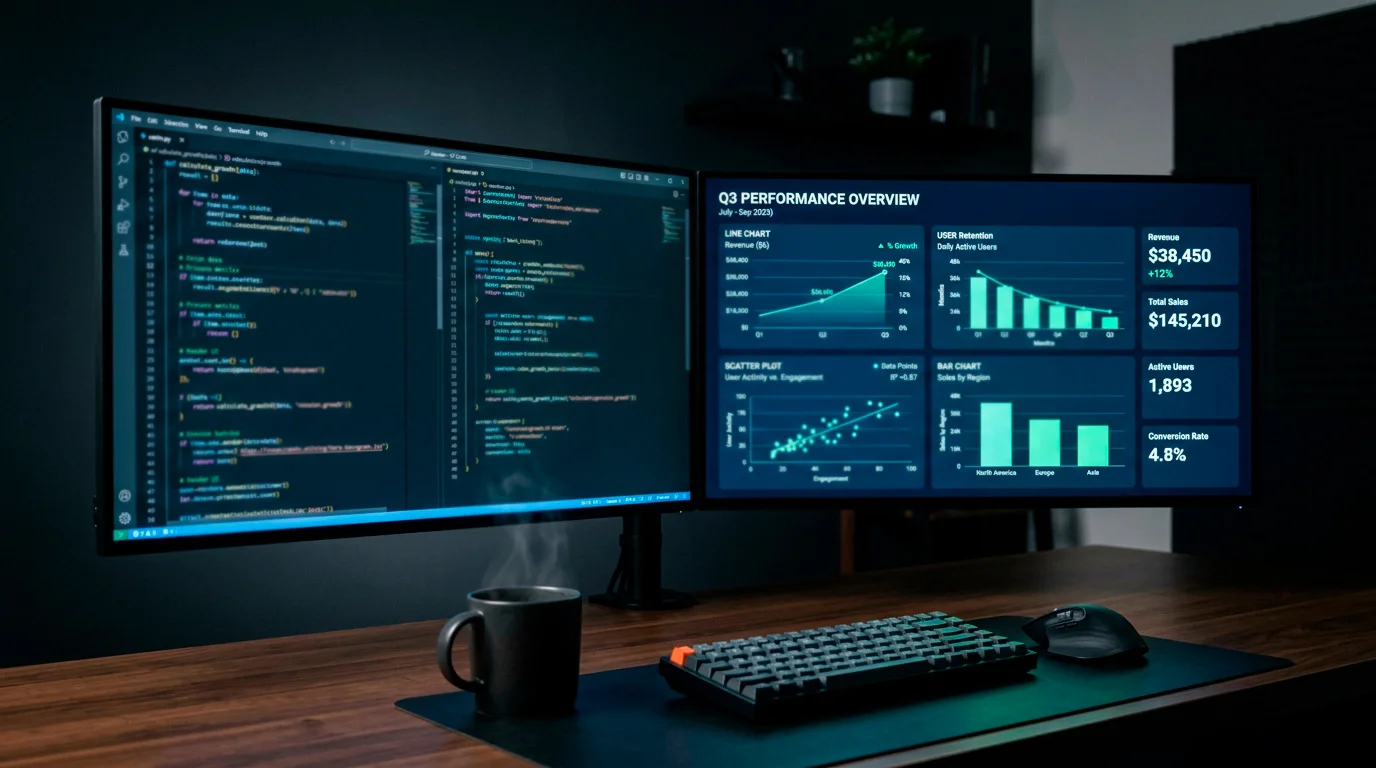
I built my first UFC prediction model in 2019 using a spreadsheet and basic regression analysis. It was crude, but it outperformed my gut instinct by a measurable margin. Since then, the modelling landscape has changed beyond recognition. Machine learning systems now process thousands of variables per fight, and some of the sharper syndicates in the space run neural networks that would not look out of place in a fintech company. The question for individual bettors is not whether AI can predict UFC fights – it can, to a degree – but whether the predictions are good enough to beat the market after vig.
UFC GGR has grown at an estimated CAGR of over 18% across the past five years, and a meaningful portion of that growth comes from sophisticated bettors and syndicates who use quantitative models to identify mispriced lines. The arms race between model-driven bettors and bookmaker trading desks is intensifying, and understanding where we stand in that race matters for anyone considering a data-driven approach.
Machine Learning Feature Engineering for UFC Pricing
Every machine learning model starts with data, and the data available for UFC modelling has expanded enormously. The standard feature set for a competitive UFC prediction model now includes striking accuracy and volume per round, takedown accuracy and defence, submission attempts, significant strikes absorbed, control time, knockdowns landed and received, and career-level aggregates of all of these metrics across different fight contexts – against southpaws versus orthodox, against grapplers versus strikers, in the first round versus the third.
Beyond the fight statistics, the better models incorporate contextual features: the number of days since each fighter’s last bout, whether either fighter has changed camps, win/loss streaks, historical performance at specific venues or altitudes, and physical attributes including reach differential, height differential, and age. Some models go further still, incorporating sentiment analysis from social media and pre-fight interviews, though the predictive value of that data remains dubious in my experience.
The training process typically uses supervised learning on historical UFC results, with the model learning to predict fight outcomes from the feature set. The most common architectures are gradient-boosted decision trees and logistic regression ensembles, though some developers have experimented with recurrent neural networks to capture the sequential nature of a fighter’s career trajectory. The model outputs a probability for each fighter winning, which is then compared to the bookmaker’s implied probability to identify potential value.
I use a gradient-boosted model as part of my workflow. It does not make my decisions for me – I use it as one input alongside qualitative analysis, camp reports, and weigh-in observations. The model’s output shifts my pre-fight probability estimate by a few percentage points in either direction, which over a season of three hundred or more bets compounds into a meaningful edge. But the model alone, without human judgment layered on top, does not beat the market consistently. That distinction is critical.
Model Odds vs Market Odds: Where the Edges Appear
The value in AI modelling is not in predicting fights more accurately than bookmakers on average. It is in identifying the specific fights where the model and the market disagree by a significant margin. When my model gives Fighter A a 62% win probability and the bookmaker is pricing him at 55% implied, that seven-point gap is a candidate for a bet. When the model and the market agree within two or three points, there is no edge and I move on.
UFC odds priced between +100 and -122 – the coin-flip range – are where models tend to outperform the market most consistently. In this range, the bookmaker is essentially admitting uncertainty, and a well-trained model can sometimes identify patterns that the market pricing does not capture. Specifically, models that incorporate stance data, reach differentials, and activity-rate mismatches tend to disagree with the market most often in fights where two evenly-matched fighters have contrasting styles. Those stylistic contrasts are hard for bookmakers to price because they require nuanced understanding of how specific skill sets interact, which is exactly the kind of pattern recognition that machine learning excels at.
At the heavy favourite end of the spectrum – fights priced at -400 or shorter – models add almost no value. The bookmaker’s calibration in this range is 88-93% accurate, and the model’s predictions converge on the same probabilities. The market has already priced everything the data can tell you. At the moderate favourite and underdog ranges – -150 to -300 for favourites, +130 to +300 for underdogs – models can identify pricing gaps, but the gaps are smaller and require larger sample sizes to exploit profitably.
Why AI Models Still Struggle with MMA’s Chaos
Here is the honest part that most AI-betting content skips over: machine learning models are structurally limited in their ability to predict MMA outcomes, and those limitations are not going away.
The first limitation is sample size. A UFC fighter typically competes two or three times per year. Over a five-year career, that produces ten to fifteen data points. Training a model on ten data points per fighter is like trying to learn a language from a ten-word vocabulary – you can pick up patterns, but your confidence in any individual prediction is low. Compare this to baseball, where a player generates hundreds of data points per season, or football, where teams play 38 league matches per year. MMA’s sample sizes are inherently thin, and no amount of algorithmic sophistication compensates for insufficient data.
The second limitation is the chaos factor. Last season, 45% of UFC fights ended via KO/TKO. A single clean punch can override fifteen minutes of tactical dominance. Machine learning models are excellent at predicting trends across large samples but poor at predicting individual high-variance events. A model might correctly identify that Fighter A is likely to win 60% of the time, but it cannot tell you whether this specific fight will be one of the 60% or one of the 40%. In a sport where a flash knockout can reverse any probability, that uncertainty is irreducible.
The third limitation is unmeasurable variables. Camp quality, personal motivation, psychological state, the specific instructions a cornerman gives between rounds – these factors influence outcomes but cannot be captured in a dataset. A fighter going through a divorce, a coaching team that has developed a perfect game plan for a specific opponent, a mental block against southpaw fighters – none of these appear in the feature set, but all of them can determine the result.
Mark Shapiro, the President and COO of TKO Group Holdings, has described the UFC’s record-setting performance as underscoring the durability of premium IP. That durability extends to the sport’s resistance to being fully modelled: the human element that makes UFC fights compelling to watch is the same element that makes them resistant to algorithmic prediction.
AI models are tools, not oracles. Used as one input within a broader analytical framework, they improve decision-making. Used as the sole decision-maker, they underperform because they cannot account for the chaos, the unmeasurable, and the irreducibly human. For a detailed look at how bookmaker pricing accuracy has evolved alongside these models, the odds accuracy analysis quantifies the calibration trends across a decade of UFC data.
Can AI accurately predict UFC fight outcomes?
AI models can identify probabilistic edges over bookmaker pricing, particularly in coin-flip fights and at moderate favourite/underdog ranges. However, they cannot reliably predict individual fight outcomes because of small sample sizes per fighter, high-variance stoppages, and unmeasurable variables like camp quality and psychological state. Models work best as one input within a broader analytical approach.
What data do machine learning models use for UFC predictions?
Competitive UFC models incorporate striking accuracy and volume, takedown and submission metrics, control time, knockdowns, career-level aggregates across different fight contexts, contextual features like layoff duration and camp changes, and physical attributes including reach and height differentials. Advanced models may add sentiment analysis, though its predictive value remains limited.
Published by the ufc Betting Trends team.