UFC Southpaw vs Orthodox Stats: Cross-Stance Finish Rates
 Available in US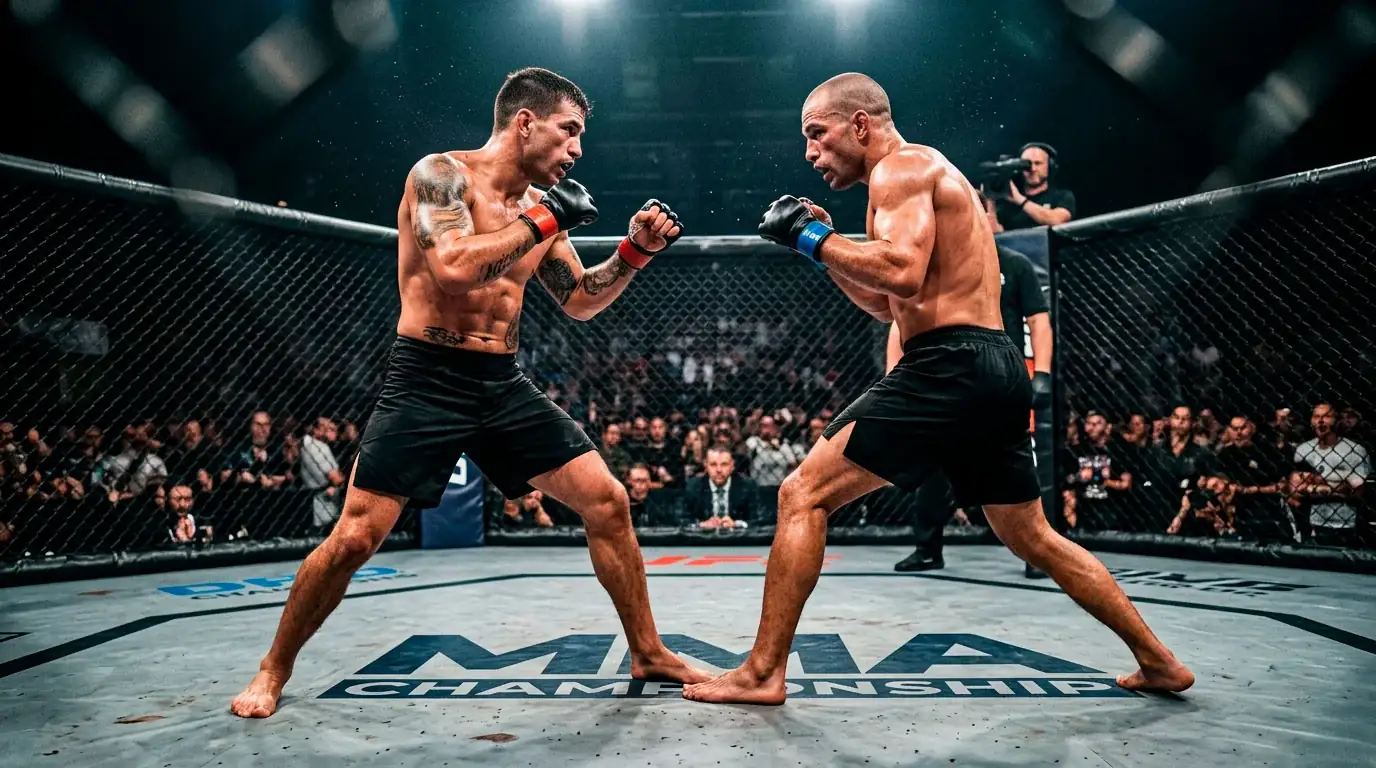
I started logging stance matchups in my fight database about four years ago, mostly on a hunch. Southpaw fights felt different — more chaotic, more open, more likely to produce a finish that nobody saw coming. Turns out that hunch was backed by hard data. Cross-stance matchups — southpaw versus orthodox — finish inside the distance 18% more often than same-stance fights. That is not a marginal difference. That is a structural pattern with direct, actionable implications for how you approach over/under and method-of-victory markets.
The 18% gap has held steady across multiple seasons, which suggests it is driven by biomechanical and tactical factors that do not change with roster turnover. Understanding why the gap exists is what separates a bettor who uses stance data as a filter from one who treats it as a curiosity.
UFC Stance Matchups and the 18% Finish-Rate Gap
When two orthodox fighters face each other, they mirror. Lead foot outside lead foot, jab against jab, power hand from the same side. Both fighters have trained thousands of rounds against this configuration. Defensive instincts are calibrated for shots coming from familiar angles. The result is a fight that tends to settle into rhythm — competitive, technical, and often destined for the scorecards.
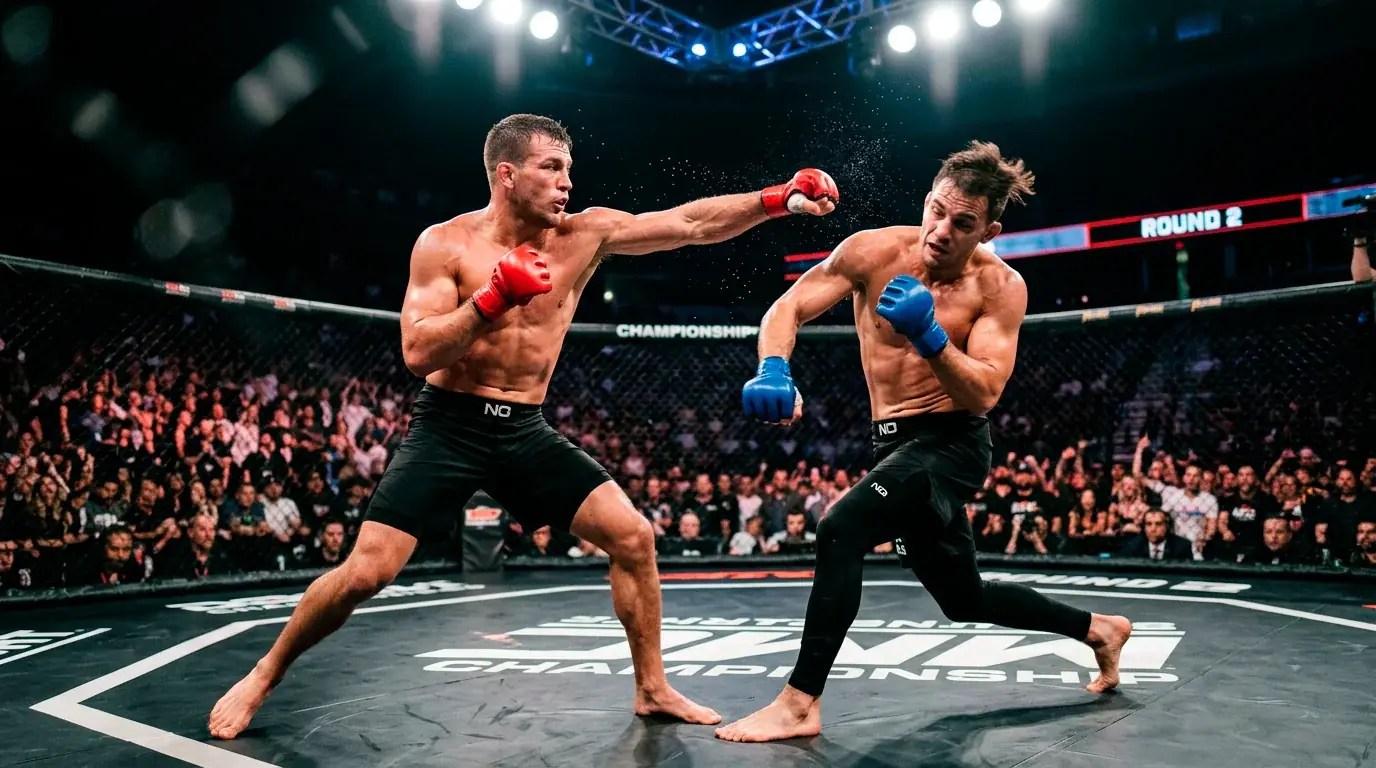
Flip one fighter to southpaw and everything changes. The lead hands switch sides, the power straights now travel along different lines, and neither fighter can rely on the defensive patterns drilled against orthodox opponents. That disruption is measurable. Across UFC bouts tracked since 2020, cross-stance fights produced stoppages at a rate 18% higher than orthodox-versus-orthodox or southpaw-versus-southpaw matchups.
The data breaks down further in useful ways. The finish-rate bump is not evenly distributed between KO/TKO and submission. Cross-stance fights see a disproportionate increase in KO/TKOs specifically — the unfamiliar angles create openings for clean shots that same-stance matchups rarely produce. Submission rates in cross-stance fights are roughly comparable to same-stance bouts, which suggests the effect is primarily a striking phenomenon.
Last season, 45% of all UFC fights ended via KO/TKO across the board. In cross-stance matchups, that figure jumped closer to 53%. The gap means that when you see a southpaw-versus-orthodox fight on a card, your default expectation for a stoppage should be meaningfully higher than the division’s base rate.
One nuance worth noting: not all southpaws are created equal. Fighters who are natural southpaws — genuinely left-handed — tend to create more chaos in cross-stance matchups than converted southpaws who switch stances for tactical reasons. The natural southpaw’s timing is different at a fundamental level, and orthodox fighters find it harder to adjust because the rhythm does not match what they have trained against. I do not always have reliable data on which fighters are natural southpaws versus converts, but when that information is available, it adds a layer of precision to the analysis.
Biomechanics and Angles: Why Stance Mismatches Cause Chaos
A friend of mine who coaches boxing once put it simply: “Orthodox versus orthodox is chess. Southpaw versus orthodox is chess where one player’s pieces move backwards.” The analogy is imperfect but the intuition is right — cross-stance fighting disrupts the spatial logic that both fighters have internalised.
The core issue is the lead-foot battle. In a same-stance fight, both fighters want their lead foot on the outside of their opponent’s lead foot — it creates an angle for the cross while keeping distance from the opponent’s power hand. In a cross-stance fight, the lead feet are on the same side, which means either both fighters are on the outside simultaneously (creating open exchanges) or neither is (creating a clashing, congested range where power shots land flush). Either scenario increases the probability of clean, fight-ending contact.
The power-hand dynamic shifts as well. An orthodox fighter’s right cross normally travels across a long arc to reach an orthodox opponent’s chin. Against a southpaw, that same right cross has a shorter, straighter path because the southpaw’s open stance presents the chin at a different angle. The inverse is true for the southpaw’s left straight. Both fighters have cleaner access to each other’s chin, which is why cross-stance knockouts often look sudden and brutal — the shot arrives on a line the defender’s instincts were not prepared for.
Clinch dynamics change too, though this gets less attention. Orthodox fighters are accustomed to underhooking with the left arm in the clinch. Against a southpaw, the underhook positions shift, and fighters who rely on clinch work for defence or offence find their grips less secure. This does not directly produce stoppages, but it creates the kind of scramble situations where a fighter can land a short punch or knee that ends the fight in transition.
Applying Stance Data to Over/Under and Method-of-Victory Markets
Knowing that cross-stance fights finish more often is only useful if you translate it into specific market plays. Here is how I use the data in practice.
First, the over/under. When I identify a cross-stance matchup on an upcoming card, I start from the under and work backwards. The 18% higher finish rate means the under is structurally favoured, all else being equal. I then check whether the specific fighters’ profiles reinforce or contradict that structural edge. Two high-output strikers in a cross-stance fight? The under is strong. A southpaw grappler against an orthodox wrestler? The stance effect is diluted because the fight is likely to spend significant time on the mat, where stance is irrelevant.
Second, method of victory. The data says the finish-rate bump concentrates in KO/TKOs rather than submissions. When I see a cross-stance fight between two fighters with stopping power, I look at the “by KO/TKO” prop for both fighters. If the bookmaker has priced it as though it were a same-stance fight — using the fighter’s overall finish rate without adjusting for the stance mismatch — there is value. The adjustment is small but consistent, and over a season of twenty or thirty cross-stance fights, it compounds.
Third, and most overlooked: live betting. Cross-stance fights tend to be more open and volatile in the early exchanges because neither fighter has found range yet. That volatility produces sharper odds swings between rounds, which creates in-play opportunities that same-stance fights rarely offer. If a southpaw drops an orthodox opponent in round one but does not finish, the live line on the orthodox fighter often overreacts — the market prices in a finish that the data says is less likely once the initial chaos has settled.
Stance is not the only variable, and I would never build an entire staking approach around it alone. But as a filter layered on top of divisional base rates and fighter profiles, it is one of the most reliable edges I have found. For a structured approach to combining stance with other pre-fight variables, the underdog betting strategy breakdown covers how physical attributes like stance and reach factor into identifying value plays on the dog side of the market.
Do southpaw fighters win more often than orthodox fighters?
Not as a blanket rule. The advantage is not about southpaws winning more frequently — it is about cross-stance fights finishing inside the distance more often. The 18% higher finish rate applies to both fighters in the matchup, not exclusively to the southpaw. What southpaws do gain is an unfamiliarity edge, since most fighters train predominantly against orthodox opponents.
How should I adjust over/under bets for southpaw matchups?
Start from the under as your default position when a cross-stance matchup is confirmed. The 18% higher finish rate means the under carries structural support beyond the divisional base rate. Adjust based on individual fighter profiles — grappling-heavy matchups dilute the stance effect, while striker-versus-striker cross-stance fights amplify it.
Published by the ufc Betting Trends team.