UFC Live Betting Strategy: In-Play Odds and Market Momentum
 Available in US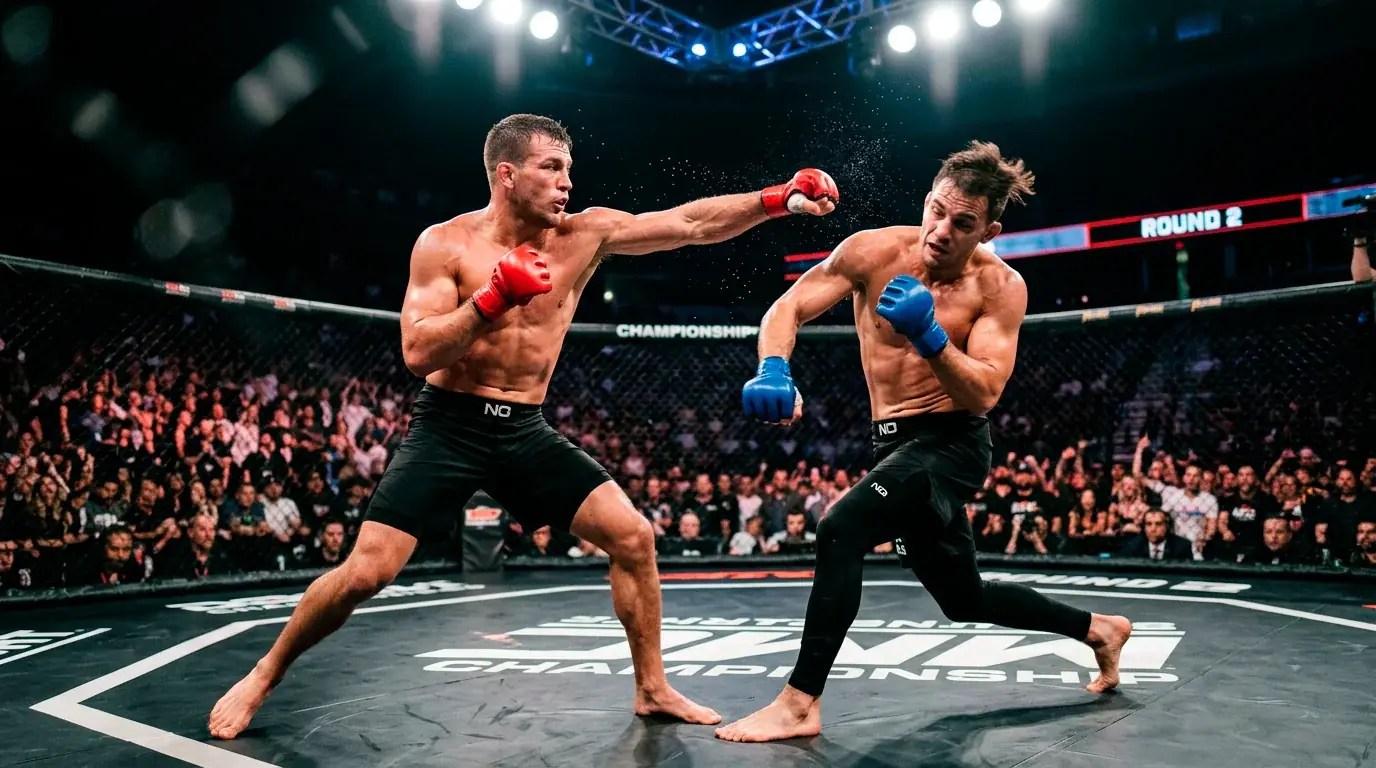
The first time I placed a live bet on a UFC fight, I panicked. The fighter I liked had just been dropped in the first round, his odds ballooned from -150 to +400 in about eight seconds, and I had maybe 15 seconds to decide whether to click. I clicked. He recovered, won by third-round submission, and I collected at four times my original stake. That experience taught me something no pre-fight analysis ever could: live betting is a different sport entirely, and the bettors who master it have access to value that simply does not exist before the cage door closes.
UFC events now drive 11% of all live-bet clicks on fight nights on major platforms like DraftKings and FanDuel. That number has grown every year since live MMA markets launched, and it will keep growing as odds-refresh technology improves and more bettors discover that the best prices often appear between rounds rather than before them. US sports betting revenues reached $16.96 billion in 2025 – a 22.8% year-on-year increase – and in-play betting is the segment growing fastest within that total.
This is not a guide for adrenaline junkies who want to throw money at live odds for the thrill of it. This is a framework for extracting value from in-play markets using round-by-round analysis, method-of-victory adjustments and the discipline to step away when the market is right and you are wrong.
In-play wagering requires quick decisions, especially when dealing with UFC round betting markets as the momentum shifts.
Table of Contents
- UFC Live Betting Market Data and Platform Trends
- Round-by-Round Betting: Reading Momentum Shifts in Real Time
- Adjusting Method-of-Victory Bets as the Fight Unfolds
- UK Platform Comparison: Live Betting Tools and Odds Refresh Rates
- Emotional Discipline: Common In-Play Mistakes and How to Avoid Them
- Frequently Asked Questions
UFC Live Betting Market Data and Platform Trends
Five years ago, live betting on UFC was a niche offering available on a handful of platforms with clunky interfaces and slow odds updates. Today it is a core product for every major operator, and the growth trajectory shows no sign of flattening. Ali Schempp, SVP and Head of Business Development at US Integrity, put it directly: people are far more likely to watch an event if they are wagering on it. Live betting takes that engagement loop and tightens it, keeping bettors active throughout every round rather than just checking scores after the fight ends.
The market data supports the trajectory. MMA betting handle reached $10.3 billion in 2024, a 17% increase from the prior year, and live betting’s share of that handle has been climbing as platforms invest in faster data feeds and more granular in-play markets. The UFC’s shift to Paramount+ has accelerated viewership – over 10 million households have watched more than 100 million hours of UFC programming since launch – and more eyeballs on fights means more activity in live markets.
For bettors, the growth of live markets is a double-edged sword. More liquidity means tighter spreads and faster price discovery, which makes the markets more efficient over time. But it also means more casual money flowing in during fights, which can distort prices in predictable ways. When a popular favourite gets rocked in the first round, the public overreacts and the live odds swing too far toward the opponent. Experienced live bettors recognise these overreactions and bet into them, capturing value that would not exist in a thinner market.
The infrastructure behind live UFC betting has improved dramatically in the past two years. Odds-refresh rates on the fastest platforms now update within seconds of significant in-cage action, compared to delays of 30 seconds or more just a few years ago. That speed advantage matters because the live markets are most inefficient in the first few seconds after a major event – a knockdown, a takedown, a cut. The bettor who can assess the significance of what just happened and act before the market adjusts has a structural edge that no amount of pre-fight analysis can replicate.
UK-based bettors have good access to live UFC markets through most licensed operators. Online gambling gross gaming yield in the UK reached GBP 7.8 billion annually, with the remote sector accounting for 46% of the entire British market. Live betting is a significant contributor to that figure, and operators are competing aggressively to offer the best in-play experience for combat sports.
What sets UFC live betting apart from, say, live football betting is the concentrated nature of the action. A football match stretches over 90 minutes with long stretches of low-variance play. A UFC fight compresses everything into 15 or 25 minutes, and the decisive moments – the knockdown, the submission attempt, the momentum shift after a round – arrive unpredictably and reshape the odds within seconds. That compression means the windows of opportunity are narrow but frequent. On a 12-fight card, you might have 30 to 40 meaningful between-rounds windows, each one offering a fresh set of live prices to evaluate. The sheer volume of decision points is what makes UFC live betting both rewarding and exhausting.
Round-by-Round Betting: Reading Momentum Shifts in Real Time
I once watched a fighter lose every minute of the first round – outstruck, taken down, controlled against the fence – and then knock his opponent unconscious 40 seconds into the second. The live odds after round one had him at +500. If you understood why the first round went the way it did, you knew that number was wrong. That is the essence of round-by-round live betting: separating what happened from what it means.
The key question between rounds is whether the outcome of the previous round was driven by skill gap or circumstance. If the favourite lost the round because the underdog is genuinely the better fighter – better timing, better footwork, better fight IQ – the live odds are probably right to shift. But if the favourite lost the round due to a single flash knockdown, a slip on a wet canvas, or a momentary lapse in concentration, the live odds are almost certainly overreacting. Most single-round setbacks fall into the second category, which means the post-round live line on the fighter who lost the round is often too generous.
Reading momentum in MMA is different from other sports because the dynamics change between rounds. A fighter who is exhausted at the end of round two might come out fresh and aggressive after a minute on the stool with his corner pouring water on him and giving instructions. A fighter who looked dominant in round one might gas out in round two because the pace was unsustainable. These momentum shifts are visible if you know what to look for – breathing rate, hand position, movement patterns, how quickly a fighter returns to their stance after exchanges.
My approach is to watch the first round without betting, use the between-rounds window to assess what happened, and then act on the live line before round two begins. That between-rounds window – typically 60 seconds – is the most valuable minute in live UFC betting. The market is processing the same visual information you are, but most casual bettors make their decision based on the scorecard rather than the qualitative assessment. “He lost the round, so he must be losing the fight” is the simplest and most common mistake in live UFC betting, and it creates systematic value for anyone willing to think more carefully about what each round actually revealed. For a deeper dive into how round-specific betting markets work, I have covered the mechanics separately.
Five-round championship fights offer a specific live-betting dynamic worth highlighting. Fighters who trail on the scorecards heading into the championship rounds – rounds four and five – often increase their aggression out of necessity, which raises the probability of a late stoppage. If you can identify a fighter who is behind but still physically capable of finishing, the live odds on that fighter plus the KO/TKO method can offer exceptional value in the later rounds. I have seen main-event fighters priced at +600 or higher going into round four only to storm back and stop their opponent, because desperation sharpened their output. These opportunities are rare but they pay handsomely, and they are almost impossible to access through pre-fight betting.
Adjusting Method-of-Victory Bets as the Fight Unfolds
Pre-fight, I might assess a bout as likely to end by KO/TKO based on both fighters’ profiles. But two rounds in, if neither fighter has been hurt and both are landing at a steady but non-threatening rate, the method-of-victory landscape has shifted fundamentally. The decision market, which might have opened at +300 pre-fight, is now the most probable outcome – and the live odds may not have adjusted fast enough.
This is where live method-of-victory betting separates from pre-fight method betting. Pre-fight, you are estimating finish probabilities based on career stats and stylistic matchup. Live, you are updating those estimates with real-time evidence. Across all UFC divisions, 45% of fights end by KO/TKO, 25% by submission and 30% by decision. But those baselines become far less useful once the fight starts, because the actual trajectory of each specific bout narrows the range of likely outcomes rapidly.
Three in-fight signals reshape my method-of-victory assessment. First, grappling success in the early rounds. If a fighter secures multiple takedowns in round one, the submission probability increases significantly, because they have demonstrated the ability to get the fight to the ground. Even if the submissions are not close, the positional control that produces them tends to compound over the course of a fight as the bottom fighter tires. Second, visible damage. Swelling around the eyes, cuts over the brow, a fighter who is visibly wobbled – these all increase the probability of a doctor stoppage or referee intervention, which counts as a TKO. Third, pace of the fight. When both fighters settle into a low-output, range-fighting rhythm after two rounds, the probability of a decision climbs dramatically, and the live odds on decision may still be offering value.
The discipline required is straightforward but psychologically difficult: you have to bet against your pre-fight thesis when the fight tells you something different. If you bet the KO pre-fight and the fight is clearly heading to a decision, the worst thing you can do is double down on the KO in-play at a worse price. The sunk cost of your pre-fight bet is irrelevant to the live decision. Every live bet should be evaluated on its own merits, using the information available right now rather than the information you had before the fight started.
One scenario I encounter often enough to have developed a specific protocol: the grappler who is losing on the feet but landing takedowns without threatening submissions. Pre-fight, you might have backed the method of KO/TKO for the striker. But live, the grappler keeps taking the fight down, absorbing punishment on the feet but controlling on the ground. The fight is drifting toward a decision in the grappler’s favour, and the live decision odds – which opened at +250 pre-fight – might now sit at +120 or even money. That is a live play, not because the method has changed dramatically, but because the fight is revealing itself to be a grinding, position-heavy contest that the judges will decide. Adjusting to what the fight actually is, rather than what you expected it to be, is the core skill of live method-of-victory betting.
Join thousands of profitable bettors who rely on our premier UFC betting guide for real-time strategies.
UK Platform Comparison: Live Betting Tools and Odds Refresh Rates
Not all live betting platforms are equal, and the differences matter more for UFC than for football or tennis. In those sports, live markets are mature and the infrastructure is standardised. In MMA, the quality of live odds varies significantly between operators – in speed, market depth and the granularity of in-play options available.
What I look for in a live UFC betting platform comes down to three factors. Speed is the most important: how quickly do the odds update after a significant in-cage event? A platform that takes 10 seconds to adjust after a knockdown is essentially giving you a 10-second window to bet at stale prices. The fastest platforms update within 2-3 seconds, which is still enough time to act if you have already decided what you want to do before the event occurs. UK online sports betting participation reached 8-10% of adults in 2025, and operators are investing heavily in reducing latency to capture this growing audience.
Market depth is the second factor. Some platforms offer only live moneyline during UFC fights. Others add live over/under, method of victory, and even round-specific markets in play. The more markets available, the more angles you can exploit. A platform that only offers live moneyline is limiting you to one dimension of a multi-dimensional market.
The third factor is mobile performance. The 18-24 age group has the highest mobile gambling rate at 76%, and UFC events often run late in the evening UK time, which means a significant portion of live UFC betting happens on phones. A platform with a clunky mobile interface or frequent lag during peak betting moments is costing you money, because the seconds you lose to interface friction are seconds during which the live odds are moving against you. I keep two or three operator apps open during every event so I can compare live lines and place bets on whichever platform offers the best price at the moment I need it.
One UK-specific consideration: cash-out features during live UFC fights. Some operators offer partial or full cash-out between rounds, which adds a layer of portfolio management to live betting. If you bet the underdog pre-fight at +300 and they win the first round, you might be able to cash out at a profit without waiting for the fight to end. This is not always the optimal play – sometimes riding the bet to completion offers better expected value – but the optionality is valuable, especially in volatile heavyweight or light heavyweight fights where the situation can reverse in seconds.
Emotional Discipline: Common In-Play Mistakes and How to Avoid Them
I have a rule taped to my monitor: “If you are shouting at the screen, do not touch the keyboard.” It sounds trivial, but it has saved me more money than any analytical framework I have ever built. Live betting is emotionally turbulent in a way that pre-fight betting is not, and the bettors who lose the most in-play are the ones who let adrenaline override analysis.
The most common in-play mistake is revenge betting. You bet the favourite pre-fight, the favourite loses the first round, and instead of assessing the situation objectively, you double down at worse odds because you want to “get back” to where you were. This is textbook loss aversion, and it compounds your exposure to a fighter who is actively losing. The second most common mistake is the mirror image: you bet the underdog, the underdog wins the first round, and you pile on more money at shorter odds, reducing your average payout while increasing your stake. Both mistakes share the same root cause – making decisions based on your existing position rather than the current state of the fight.
Forty-eight percent of UK adults participated in some form of gambling in the preceding four weeks as of late 2025. That is a massive population of recreational bettors, many of whom are experiencing live UFC betting for the first time on their mobile devices. The operators know this, and the live betting interface is designed to make placing bets as frictionless as possible – one tap, instant confirmation, no cooling-off period. That design serves the operator’s interests, not yours. Building your own friction into the process – a mandatory 10-second pause before every live bet, a pre-set maximum number of live bets per event, a hard spending cap per fight – is essential.
My own discipline framework limits me to two live bets per fight and five per card. Each live bet must be logged in a separate column from my pre-fight bets so I can track live performance independently. Over 18 months of tracking, my live betting has outperformed my pre-fight betting by roughly 4% ROI, but only because the limits prevent me from overtrading during the emotional peaks of a fight night. Without the limits, I am confident the returns would be negative – not because my analysis is worse in-play, but because the volume would include too many bets driven by emotion rather than edge.
The best live bettors I know share one trait: they can watch a fight unfold and feel nothing about the money. They process information, calculate probabilities and act mechanically. That emotional detachment does not come naturally – it is a skill developed over years of practice, and the bettors who develop it fastest are the ones who start with strict rules and enforce them without exception.
Frequently Asked Questions
How quickly do live UFC odds change between rounds?
On the fastest platforms, live odds update within 2-3 seconds of significant in-cage action such as knockdowns, takedowns or visible damage. Between rounds, the odds adjust based on the consensus scorecard and any visible changes in fighter condition. The most volatile price movements happen in the first 10-15 seconds after a round ends, which is the window where the most value is available for bettors who have already formed their assessment.
Is live betting on UFC more profitable than pre-fight betting?
Live betting can produce higher ROI than pre-fight betting, but only for disciplined bettors who limit their volume and act on genuine edge rather than emotion. The live markets are less efficient than pre-fight markets in the immediate aftermath of significant events, which creates value. However, the emotional intensity of live betting leads most bettors to overtrade, which erodes any analytical edge. A structured approach with strict limits on bets per fight tends to outperform pre-fight betting by 3-5% ROI over large samples.
Which UK bookmakers offer the best live UFC betting interface?
The quality of live UFC betting interfaces varies across UK-licensed operators and changes frequently as platforms invest in upgrades. Rather than recommending specific operators, look for three features: odds-refresh speed under 5 seconds, availability of multiple in-play markets beyond just moneyline, and smooth mobile performance without lag during peak moments. Keeping two or three apps open during events allows you to compare live lines and capture the best available price.
Prepared by the ufc Betting Trends editorial staff.